
Give the question room to grow.

Some problems need more than a client brief. Our independent programme creates space to examine them, beginning with induction-heating prediction and extending into personal intelligence and computational engineering.

Explore the programme
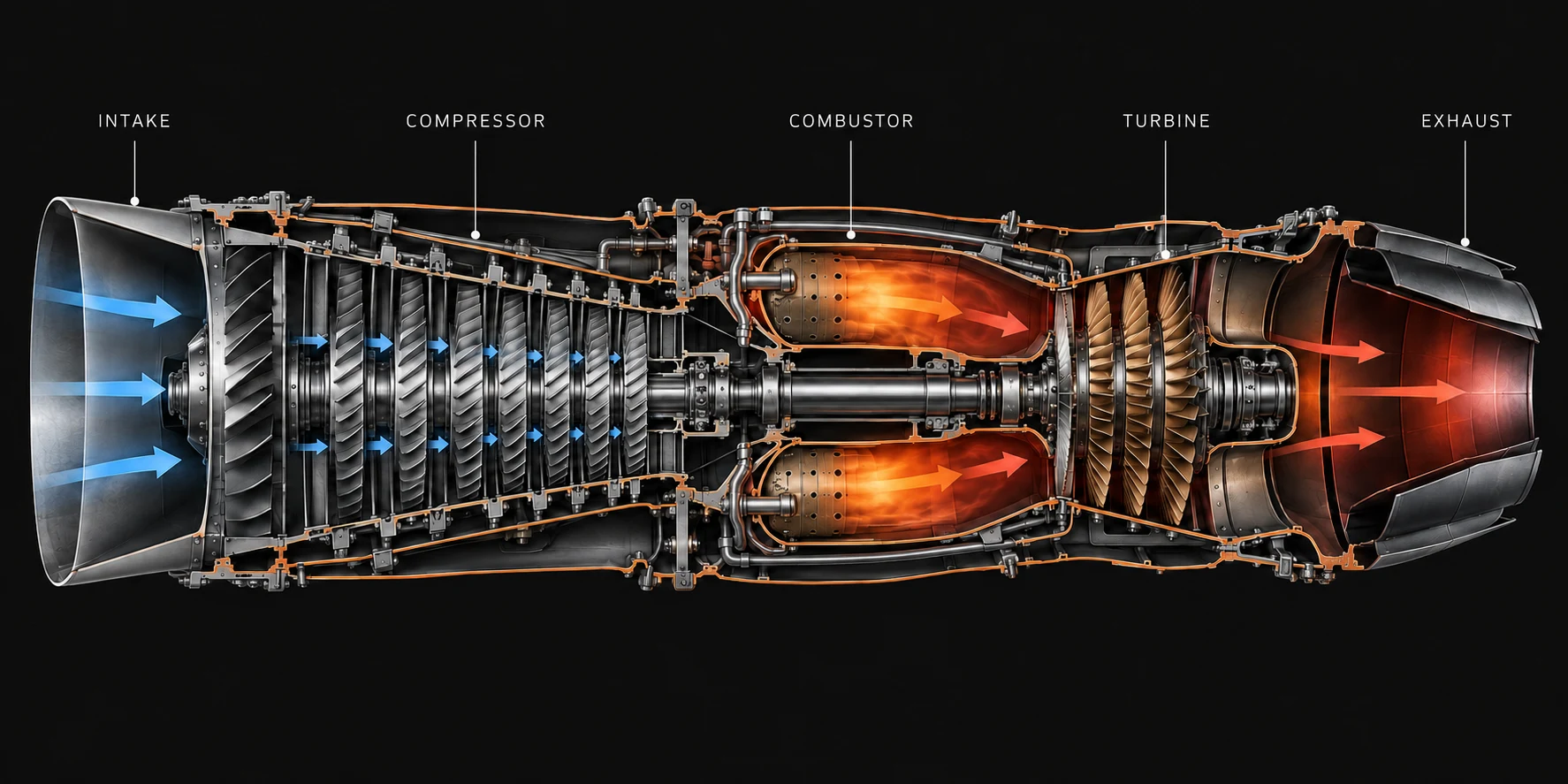
Illustrative engine cutaway showing compressor, combustor, turbine and exhaust

Induction heating prediction.

Investigate the mapping from coil excitation, material properties and geometry to thermal response. Compare candidate models by prediction error and total computational cost, using reference cases excluded from training and model selection.

The research approach

Orb. A presence of your own.

Design an assistant around conversational context, user-selected regional accents and personal control of memory. The architecture separates an interaction sphere from a home computing hub, with face, depth and voice verification layers governing personal access.

Explore Orb

Computational engineering.

Develop methods for repeated engineering comparisons: numerical simulation, learned approximations and models linked to operating data. Further directions include gas-turbine flow and thermal behaviour, cooling mechanisms and refrigeration-cycle optimisation.

Methods and directions

Different questions.
Shared discipline.

Specify the input conditions, the output that matters and the evidence needed for a decision. Develop a model, prototype or interface that can be examined against those requirements, then use the findings to choose the next iteration.

The methods may cross industries, but acceptance remains application-specific. A thermal prediction needs a defined error tolerance; an identity system needs access and impersonation tests; an interface needs evaluation through the tasks its users must complete.

Our approach to the work

Have a problem worth investigating together?

Discuss collaboration